
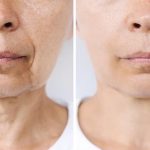
As we mentioned, a facelift makes the skin look younger. A facelift also has other benefits:
Tightening of the facial skin
Upward lifting due to the skin stretching
Helping to smooth wrinkles around the mouth
Before surgery, you may be asked to
What to do the night before and the morning of surgery.
Use of anesthesia during surgery.
Postoperative care and follow-up treatment.
If you are overweight and want to lose weight, you should do so before surgery.
Drinking plenty of water before and after surgery will help you recover faster and get a better result.
Two weeks before the facelift surgery, you should stop taking aspirin and aspirin-containing products. (To prevent the risk of bleeding) Smoking is also prohibited for at least 2 weeks before the surgery. Sunbathing is also not allowed. If you use skin rejuvenation creams, stop using them one to two weeks before the surgery. If you plan to dye or curl your hair, avoid these chemicals for a few weeks because the wounds are sensitive to them.
The facelift surgery process involves the following steps:
Step 1 – Anesthesia
You will be given medication to keep you comfortable during the procedure. Options include intravenous sedation and general anesthesia. Your doctor will recommend the best option for you. Several other surgical procedures can improve the results of a facelift. These include:
Facial implants
Soft tissue augmentation to reshape facial features (cosmetic injections)
Surface resurfacing techniques to improve the texture and appearance of facial skin
Injections to reduce wrinkles
Step 2 – Surgical incision
Depending on the amount of change you want, facelift options include a traditional facelift, a minimally invasive facelift, and a neck lift. A traditional facelift incision usually starts at the hairline or behind the temples and goes around the ear to the base of the skull. The face, cheeks, and neck can be reshaped or repositioned, and the underlying tissue can be repositioned. The middle layers of the face are also lifted. The skin is re-stretched over the lifted areas and excess skin is removed. Another incision may be made under the chin to improve aging. Stitches or skin glue are used to close the incisions. An alternative to traditional facelift surgery uses smaller incisions at the temples, extending around the ear and possibly into the lower eyelid or under the upper lip. Drooping cheeks, baggy skin, and under the chin can be corrected with a neck lift. The neck lift incision usually starts in front of the chin, wraps behind the ear, and ends at the base of the skull.
Step 3 – Closing the Incisions
The facelift incision lines will be well hidden by the hairline and natural contours of the face and ears after healing.
Step 4 – Results
After the swelling and bruising have subsided, the results of the lift will be visible. The end result will not only give you a younger, less tired appearance, but will also give you more confidence.
Surgeon’s Fee
Hospital or Surgery Center Fee
Anesthesia Fee
Prescription Fee
Postoperative Garments
Medical Test Fee
Your satisfaction is not just dependent on the cost. When choosing a plastic surgeon for a facelift, keep in mind that their experience and your comfort with them are just as important as the final cost of the surgery.